Original vs fake switches: how to tell
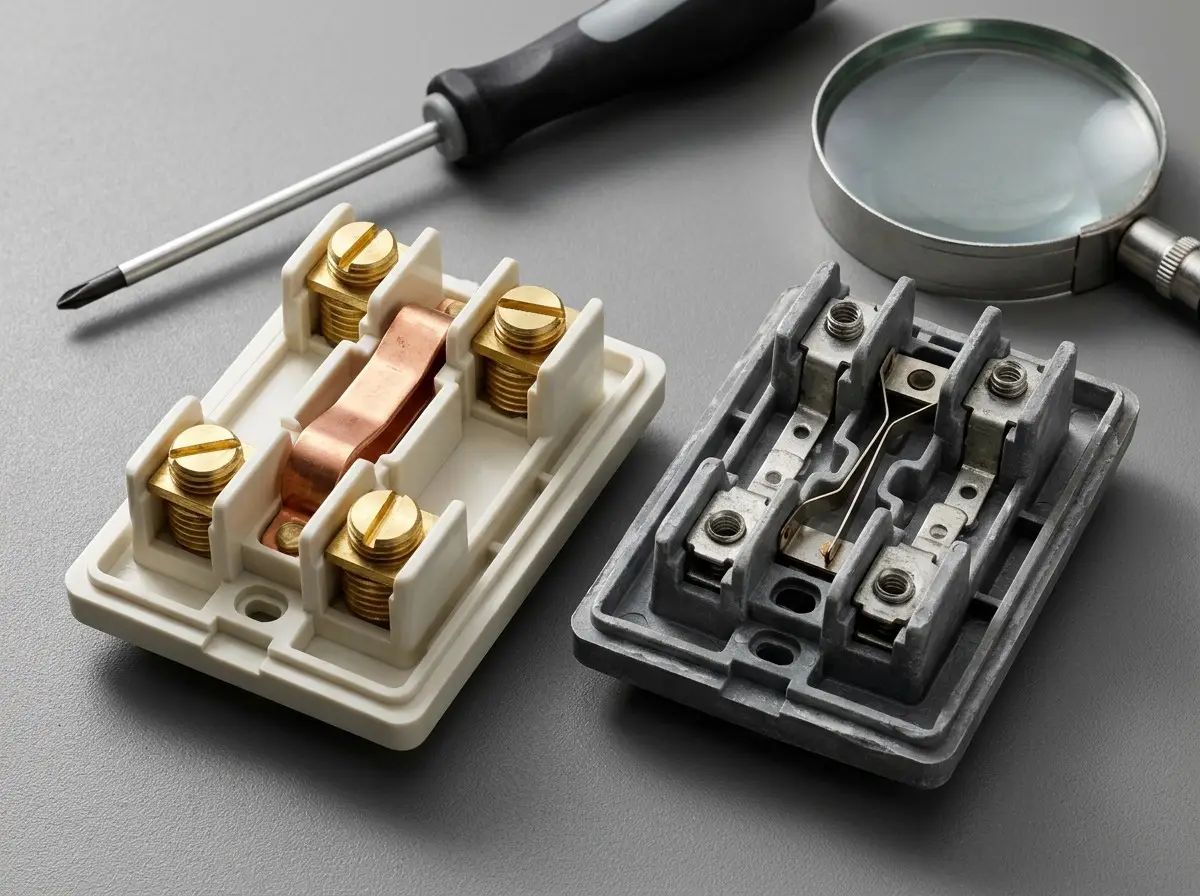
Fake switches look almost the same on the shelf. Inside, thin terminals and weak springs overheat and spark. Here are seven checks you can do yourself.
- 1
Packaging
Look for clean printing, the correct logo, a batch or lot number and the manufacturer's address. Blurry print and spelling mistakes are warning signs.
- 2
Weight
Genuine switches with brass parts feel heavier. Compare with one you know is original.
- 3
Print on the product
Rating marks (e.g. 10A 250V) should be sharp and moulded or printed cleanly, not smudged.
- 4
Terminals
Original terminals are thick, solid brass with firm screws. Fakes use thin, shiny plated metal that bends.
- 5
Springs and action
A genuine switch clicks firmly and evenly. A loose, soft or uneven click suggests a weak mechanism.
- 6
Where you buy
Buy from the brand's authorised dealer and get a proper invoice. Very low prices are the biggest warning sign.
- 7
Verify with the brand
Many brands have a hotline or code check. Call them with the batch number if you are unsure.
Why it matters
A fake switch or socket can overheat behind the plate where you can't see it. That is how many house fires start.
Send us a photo, we'll check it
Not sure about a switch you bought? Send clear photos of the front, back and packaging on WhatsApp. We'll tell you what we see.
Send a photo on WhatsAppFrequently asked questions
What is the easiest way to spot a fake switch?
Check the terminals and the weight. Genuine switches have solid brass terminals and feel heavier. A very low price is the biggest warning sign.
Are fake switches really dangerous?
Yes. Thin terminals and weak contacts overheat under load, which can melt the plate and start a fire inside the wall.
Can you check a switch I already bought?
Yes. Send clear photos on WhatsApp and we'll tell you what we see.